The Complete TPLO Recovery Protocol — Free Download
The vet fixed the bone.
Now you have to save the other leg.
48% of dogs who tear one CCL will tear the opposite one within 18 months. Download the evidence-based 6-phase recovery protocol designed to stop muscle wasting, suppress joint inflammation, and keep your dog in the 52%.
Send Me the Free Guide →No spam. Just the guide. Unsubscribe anytime.


The Complete TPLO Recovery Protocol — Free Download
The vet fixed the bone.
Now you have to save the other leg.
48% of dogs who tear one CCL will tear the opposite one within 18 months. Download the evidence-based 6-phase recovery protocol designed to stop muscle wasting, suppress joint inflammation, and keep your dog in the 52%.
Send Me the Free Guide →No spam. Just the guide. Unsubscribe anytime.
The standard of care stops at the bone.
When your dog tears their cranial cruciate ligament (CCL), the veterinary protocol is clear: perform a TPLO surgery, prescribe pain medication, and mandate eight weeks of strict crate rest.
But what happens during those eight weeks?
- Your dog loses up to 20% of the muscle mass in their surgical leg.
- They shift all their weight to the healthy leg, placing massive, unnatural stress on the remaining CCL.
- Systemic inflammation accelerates osteoarthritis in the joint.
This is why the 48% statistic exists. The surgery fixes the mechanics of the knee — but the recovery period puts the rest of the body at risk. This guide addresses what happens after the surgery.
What you'll learn inside The 48% Rule
I built this protocol when my own dog, Kado, had his TPLO. I refused to accept a coin-flip chance of a second surgery — so I went into the clinical literature to find out what actually works.
The Atrophy Window
Why the first two weeks are the most critical period of recovery, and the one piece of gear you need to ditch the cone of shame.
The Nutritional Intervention
The exact protein and marine Omega-3 dosing formula required to suppress joint inflammation from Day 1 — not week eight.
The Rebuilding Phase
The specific hydrotherapy and at-home PT exercises that rebuild neuromuscular control and restore weight-bearing confidence.
The Longevity Stack
The 6 evidence-backed supplements proven to preserve muscle mass and protect cartilage integrity long after surgery.
The Gatekeeping Warning
The hidden cancer risk associated with a common rehab therapy that clinics rarely disclose — and what to use instead.
This 17-page guide covers all 6 phases of recovery — from the critical first 48 hours through the long-term supplement stack.
I didn't just read the research. I lived it.
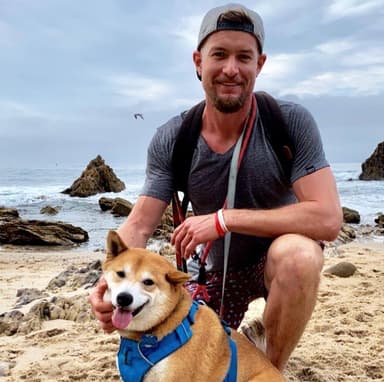
“When I learned that 48% of all dogs tear the other CCL, my heart sank. I could NOT put Kado through this surgery again. I realized right then that the vet's job was to fix the bone — but it was my job to find a solution for the rest of his body. Every recommendation in this guide is supported by peer-reviewed clinical research, and every protocol is exactly what I used to get Kado back to 100%.”
Frequently Asked Questions About TPLO Recovery
What is the 48% rule for dogs after TPLO surgery?
The 48% rule refers to the clinical finding that approximately 48% of dogs who tear one cranial cruciate ligament (CCL) will tear the opposite CCL within 18 months. This occurs largely because crate rest causes muscle atrophy in the surgical leg, forcing the dog to shift weight to the healthy leg — placing abnormal mechanical stress on the remaining CCL.
How do I prevent my dog from tearing the other CCL after TPLO?
The three most important interventions are: (1) structured physical therapy to rebuild muscle symmetry and reduce compensatory loading on the healthy leg, (2) anti-inflammatory nutritional support starting from Day 1, including marine Omega-3 fatty acids, and (3) weight management to reduce mechanical load on both joints. This guide covers all three with specific protocols and dosing formulas.
What supplements help dogs recover from TPLO surgery?
The evidence-backed supplement stack for TPLO recovery includes marine-sourced Omega-3 fatty acids (EPA/DHA) for joint inflammation, adequan (polysulfated glycosaminoglycan) for cartilage protection, glucosamine and chondroitin for joint matrix support, and specific antioxidants to address oxidative stress from surgery. This guide covers all six with clinical dosing guidance.
How long is the full TPLO recovery timeline?
Basic bone healing occurs within 8–12 weeks. Full muscle rebuilding and return to unrestricted activity takes 4–6 months. However, without structured rehabilitation, muscle atrophy in the surgical leg can persist for 12+ months, increasing long-term risk of osteoarthritis and opposite-leg CCL injury. The 6-phase protocol in this guide addresses each stage from Day 1 through long-term maintenance.
Is hydrotherapy necessary for TPLO recovery?
Hydrotherapy (underwater treadmill or pool swimming) is one of the most effective tools for TPLO recovery because water reduces load-bearing stress while allowing active muscle engagement. However, it is not strictly necessary — this guide includes equivalent land-based PT exercises that can be performed at home when hydrotherapy is unavailable or cost-prohibitive.
Can dogs fully recover from TPLO surgery?
Yes. With proper surgical technique and a structured rehabilitation protocol, the majority of dogs return to full activity levels within 4–6 months. Dogs that complete evidence-based post-surgical PT are 1.9x more likely to reach full functional recovery at 8 weeks compared to crate rest alone. Long-term outcomes are strongly influenced by the quality of post-operative care.
Also Available Free
At-Home PT Guide — 25 Exercises After TPLO
The companion exercise program covering the 25 specific movements that rebuild neuromuscular control after CCL surgery — illustrated, with sets, reps, and a 4-week progressive plan.
No bone cut?
Lateral Suture / Extracapsular Repair Guide
Kado's latest recovery path. A surgeon-first protocol for protecting the suture, rebuilding the dog, and watching for red flags after extracapsular CCL surgery.
Don't leave your dog's recovery to chance.
Get the complete, step-by-step protocol delivered straight to your inbox.
Download the Free Guide Now →We respect your privacy. No spam, just evidence-based pet health.
References
- Griffon DJ. "A review of the pathogenesis of canine cranial cruciate ligament disease as a basis for future preventive strategies." Veterinary Surgery 39, no. 4 (2010): 399–409.
- Monk ML et al. "Safety and functional outcomes associated with short-term rehabilitation therapy in post-operative management of TPLO." — PMC
- Zink MC, Baietto LR, & Ritter MJ. "Survey of risk factors for cranial cruciate ligament rupture in dogs." Journal of the American Veterinary Medical Association 261 (2023): 1–9.