
The Muscle Preservation Protocol: MYOS vs. Ursolyx for Canine Sarcopenia and Atrophy
A rigorous, evidence-based breakdown of the two leading canine muscle preservation supplements—and which one actually works for aging, CKD, and post-surgical recovery.
Jake Kelly
Pet Longevity Researcher
Whether a dog is recovering from a TPLO surgery, managing chronic kidney disease (CKD), fighting cancer cachexia, or simply navigating the inevitable decline of senior years, the most significant threat to their quality of life is often the same: the rapid, profound loss of skeletal muscle mass.
Muscle loss in dogs is not just a cosmetic issue; it is a functional crisis. In orthopedic recovery, disuse atrophy weakens the surgical leg, shifting weight to the healthy limb and dramatically increasing the risk of a second injury. In systemic diseases like CKD or cancer, muscle wasting (cachexia) accelerates physical decline and is directly correlated with shorter survival times. In aging dogs, age-related muscle loss (sarcopenia) strips away mobility, independence, and joint stability.
Historically, veterinarians have relied solely on physical rehabilitation and high-protein diets to combat this atrophy. Recently, however, two targeted nutritional interventions have emerged with clinical data supporting their ability to actively preserve muscle mass at the molecular level: MYOS Canine Muscle Formula (Fortetropin) and Virbac's Ursolyx (Ursolic Acid).
Both products claim to stop muscle wasting, but they operate through entirely different biological mechanisms and possess vastly different levels of clinical evidence. Here is the rigorous, evidence-based breakdown of how they work, what the data actually shows, and which one belongs in your dog's muscle preservation protocol.
The Contender: MYOS Canine Muscle Formula (Fortetropin)
MYOS is currently the most widely recognized muscle preservation supplement in veterinary medicine. Its active ingredient is Fortetropin, a proprietary, non-thermal pasteurized, freeze-dried fertilized egg yolk powder.
The Mechanism: Myostatin Inhibition
Fortetropin works by reducing serum levels of myostatin. Myostatin is a protein produced primarily in skeletal muscle cells that circulates in the blood and acts as a negative regulator of muscle growth. Essentially, myostatin is the body's "brake pedal" for muscle hypertrophy. During periods of immobilization, illness, or advanced age, myostatin expression increases, signaling the body to break down muscle protein and halt new protein synthesis [1]. By inhibiting myostatin, Fortetropin aims to take the foot off the brake, allowing the dog to retain muscle mass even when they cannot exercise or are battling systemic disease.
The Clinical Evidence
Unlike many veterinary supplements that rely on theoretical mechanisms or rodent data, MYOS has been tested directly in canine populations experiencing acute and chronic muscle loss.
In a 2020 randomized, double-blinded, placebo-controlled clinical trial published in PLOS ONE, researchers at Kansas State University evaluated 100 client-owned dogs undergoing TPLO surgery [1]. The dogs were given either Fortetropin or a macronutrient-matched placebo (cheese powder) for 12 weeks post-operatively.
The results were compelling:
Muscle Preservation: At the 8-week mark (the end of the strict exercise restriction period), dogs in the placebo group experienced a statistically significant loss of thigh circumference (-1.21 cm). In contrast, dogs receiving Fortetropin experienced no significant reduction in thigh circumference (-0.54 cm, p=0.31) [1].
Myostatin Levels: Serum myostatin levels rose significantly in the placebo group during the restriction period, while the Fortetropin group saw no significant increase [1].
An independent 2022 study also confirmed that Fortetropin improved mobility scores in geriatric dogs suffering from age-related sarcopenia, adding weight to its efficacy profile beyond surgical recovery [2].
The Challenger: Virbac Ursolyx (Ursolic Acid)
Ursolyx is a newer entry into the veterinary market, developed through a collaboration between Virbac and Emmyon, a biotechnology company. Its active ingredient is ursolic acid, a naturally occurring pentacyclic triterpene found in the peels of apples, rosemary, and other herbs.
The Mechanism: mRNA Atrophy Suppression
Ursolic acid was identified through a sophisticated computational biology screen at the Mayo Clinic. Researchers looked for molecules whose mRNA expression signature was the exact opposite of the mRNA signature seen in muscle atrophy [3].
When a muscle atrophies—whether from disuse, CKD, or aging—specific genes are turned on (promoting breakdown) and others are turned off (halting synthesis). Ursolic acid acts directly on skeletal muscle cells to reverse this genetic signaling. In rodent models, it has been shown to increase muscle mass, strength, and endurance, and to protect against atrophy caused by fasting, spinal cord injury, and chronic kidney disease [3].
The Clinical Evidence
The underlying molecular biology of ursolic acid is robust and well-documented in human and rodent literature. However, the canine-specific clinical evidence is currently much thinner than that of MYOS.
The primary evidence supporting Ursolyx is a 2024 proof-of-concept study published in the journal Animals [4]. This randomized, placebo-controlled trial evaluated 20 older Beagles with age-related muscle atrophy (sarcopenia). The dogs received either ursolic acid or a placebo for 60 days.
The findings:
Molecular Changes: Muscle biopsies confirmed that ursolic acid successfully inhibited numerous mRNA expression changes known to promote muscle atrophy in dogs [4].
Functional Outcomes: The dogs receiving ursolic acid showed statistically significant improvements in exercise participation (wheel running) and cognitive/physical performance in a T-maze [4].
While these results are promising, the study has significant limitations. The sample size was very small (20 dogs), it evaluated aging Beagles rather than a diverse population of dogs with varying causes of atrophy, and it did not include direct anatomical measurements of muscle mass preservation (like ultrasound or thigh circumference) [4]. Furthermore, the study was funded and authored by employees of the companies that manufacture the supplement, a conflict of interest that requires the data to be viewed as preliminary until independently replicated.
The Verdict: Which Should You Choose?
Both MYOS and Ursolyx represent a massive step forward from the days of simply accepting muscle loss as an inevitable consequence of aging, surgery, or disease. They are both mechanistically sound and target the biological pathways of atrophy. However, when building an evidence-based muscle preservation protocol, the hierarchy of data matters.
Feature | MYOS (Fortetropin) | Ursolyx (Ursolic Acid) |
|---|---|---|
Mechanism | Myostatin inhibition | mRNA atrophy suppression |
Canine Clinical Trials | Multiple, including a 100-dog study | One 20-dog geriatric Beagle study |
Direct Evidence of Mass Preservation | Yes (Prevents thigh circumference loss) | No (Tested for functional/molecular changes) |
Independent Replication | Yes | No |
The Feeding Friend Verdict | The Standard of Care | A Promising Adjunct |
For the Patient: If you are choosing one supplement to protect your dog's muscle mass—whether they are recovering from a TPLO, managing CKD, or fighting age-related sarcopenia—MYOS is the clear, evidence-backed choice. It has been tested directly on large populations of dogs and demonstrably prevented the physical loss of muscle tissue [1].
The Future of Muscle Preservation: Ursolyx is not snake oil; the computational biology behind it is fascinating and likely effective. Because MYOS and Ursolyx operate through entirely different biological pathways—one inhibiting the myostatin protein in the blood, the other altering mRNA expression inside the muscle cell—they are theoretically complementary. For a senior dog managing severe sarcopenia, or a dog battling the profound cachexia of cancer or advanced CKD, utilizing both mechanisms could represent the ultimate muscle preservation strategy. However, until larger, independent trials validate Ursolyx across diverse clinical populations, MYOS remains the foundational recommendation.
Note: Always consult with your veterinarian before adding new supplements to your dog's protocol, especially if they are managing a systemic disease like CKD or cancer.
References
[1] White DA, Harkin KR, Roush JK, Renberg WC, Biller D. "Fortetropin inhibits disuse muscle atrophy in dogs after tibial plateau leveling osteotomy." PLoS ONE. 2020;15(4):e0231306. https://doi.org/10.1371/journal.pone.0231306
[2] Hetrick K, Harkin KR, Roush JK. "Evaluation of Fortetropin in geriatric and senior dogs with reduced mobility." The Canadian Veterinary Journal. 2022. https://pmc.ncbi.nlm.nih.gov/articles/PMC9484193/
[3] Kunkel SD, Suneja M, Ebert SM, et al. "mRNA expression signatures of human skeletal muscle atrophy identify a natural compound that increases muscle mass." Cell Metabolism. 2011;13(6):627-638. https://doi.org/10.1016/j.cmet.2011.03.020
[4] Ebert SM, Nicolas CS, Schreiber P, et al. "Ursolic Acid Induces Beneficial Changes in Skeletal Muscle mRNA Expression and Increases Exercise Participation and Performance in Dogs with Age-Related Muscle Atrophy." Animals. 2024;14(2):186. https://doi.org/10.3390/ani14020186
Related Articles

Hormone Replacement Therapy for Senior Dogs
Is traditional spay/neuter always the best choice for your dog's long-term health? New research reveals a hidden hormonal crisis, linking sterilization to a higher risk of cancer, joint disease, and accelerated aging. Discover how emerging hormone replacement therapies and hormone-sparing sterilization techniques are creating a new frontier in canine longevity science.
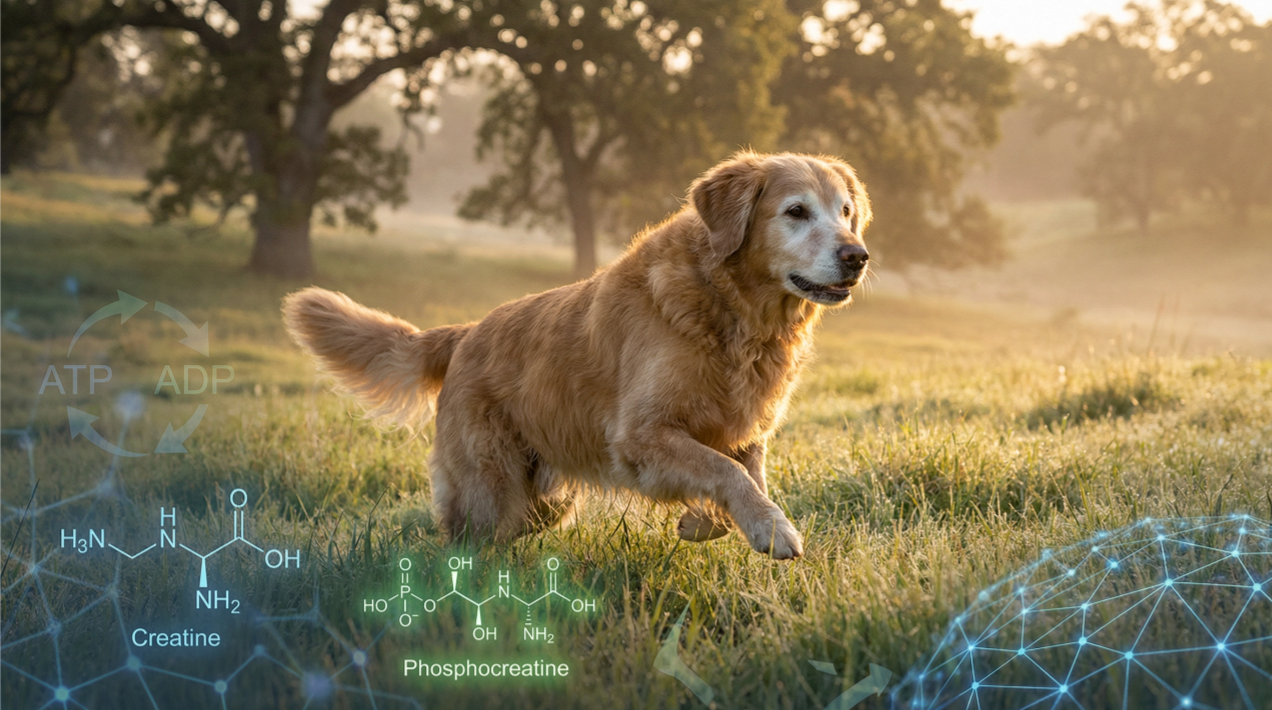
Creatine Supplementation in Aging Dogs: A Narrative Review of Bioavailability, Efficacy, Safety, and Longevity Applications
Most dogs fed commercial diets are functionally creatine-deficient due to the near-complete destruction of dietary creatine during high-heat pet food manufacturing — a critical and underappreciated nutritional gap with real consequences for muscle, brain, and heart health as dogs age. Emerging research demonstrates that creatine supplementation in dogs improves high-intensity athletic performance, combats age-related muscle loss (sarcopenia), protects against cognitive decline, and supports cardiac bioenergetics, making it one of the most compelling multi-target longevity interventions available to proactive pet owners today. This review synthesizes the current evidence, identifies guanidinoacetic acid (GAA) as the most stable and bioavailable delivery form for creatine in commercial diets, and provides practical, veterinarian-informed dosing guidance for senior, athletic, and at-risk dogs.