
A Dog Owner's Guide to Chronic Kidney Disease: Diagnosis, Management, and Extending Life
Jake Kelly
Pet Longevity Researcher
Abstract
Objective: To provide a comprehensive, evidence-based primer for owners of dogs newly diagnosed with Chronic Kidney Disease (CKD), synthesizing current best practices for diagnosis, management, and longevity.
Background: Chronic Kidney Disease is a leading cause of morbidity and mortality in geriatric dogs. While progressive, the disease's trajectory can be significantly altered through proactive, multi-modal care. This brief serves as an accessible yet scientifically grounded resource for owners to understand the disease and partner effectively with their veterinarian.
Methods: A review of current veterinary literature was conducted, focusing on IRIS (International Renal Interest Society) staging guidelines, clinical trials on renal diets, studies on key pharmaceuticals (e.g., telmisartan, beraprost), and expert consensus on supplements and hydration. Key data on prevalence, survival rates, and the efficacy of interventions were synthesized.
Results: The evidence confirms that a therapeutic renal diet is the cornerstone of management, capable of tripling survival time. Early diagnosis via SDMA (Symmetric Dimethylarginine) offers a critical window for intervention before significant nephron loss. The brief details a multi-pronged approach: 1) Meticulous dietary phosphorus restriction, 2) Management of proteinuria and hypertension with ARBs like telmisartan, 3) Maintenance of optimal hydration, and 4) The use of evidence-based supplements. Emerging therapies, particularly the prostacyclin analogue beraprost, show exceptional promise, with one 2026 study demonstrating a 5.6-fold increase in median survival in IRIS Stage 2 dogs.
Conclusion: A CKD diagnosis is manageable. By implementing a structured protocol focused on diet, hydration, and targeted medical therapies, owners can significantly slow disease progression, maintain an excellent quality of life, and extend the lifespan of their canine companions.
1. Key Findings
A diagnosis of Chronic Kidney Disease (CKD) in a dog is a serious and emotional event, but it is not a death sentence. Modern veterinary medicine has transformed CKD from a rapidly fatal disease into a manageable chronic condition. The key finding for a newly diagnosed owner is that proactive, multi-modal management can significantly extend both the quality and quantity of life for a dog with CKD. The cornerstones of this management are early diagnosis through advanced biomarkers, meticulous dietary therapy focused on phosphorus restriction, maintaining optimal hydration, and strategically using medications and supplements to control the consequences of declining kidney function. The goal is to slow the progression of the disease, manage clinical signs, and maintain an excellent quality of life for as long as possible.
2. Data and Statistics
Understanding the numbers behind CKD helps frame the diagnosis and prognosis. While prevalence estimates vary, it is a common disease of aging dogs.
Prevalence: CKD is estimated to affect between 0.5% and 7% of the general dog population, with the incidence increasing significantly with age [1]. Some studies suggest the rate approaches 25% in geriatric populations [2].
Early Diagnosis: The traditional marker for kidney function, creatinine, does not become elevated until approximately 75% of kidney function is lost. The newer biomarker, Symmetric Dimethylarginine (SDMA), can detect as little as a 25% to 40% loss of function, allowing for much earlier diagnosis and intervention [3].
Prognosis by Stage: The International Renal Interest Society (IRIS) staging system is the global standard for classifying CKD. Survival is directly correlated with the stage at diagnosis. A 2018 study reported the following median survival times:
IRIS Stage 2: 14.8 months (444 days)
IRIS Stage 3: 11.1 months (334 days)
IRIS Stage 4: 2.0 months (60 days) [4]
Impact of Diet: The single most impactful intervention is a therapeutic renal diet. In a landmark study, dogs with spontaneous CKD fed a renal diet had a median survival time of 594 days, compared to just 188 days for those fed a typical maintenance diet—a 3-fold increase in survival [5].
3. Expert Opinions and Quotes
Veterinary nephrologists and nutritionists emphasize a proactive and individualized approach to CKD management.
"The most important initial recommendation for dogs with chronic kidney disease (CKD) is to change the diet to a food that is formulated for their condition. Clinical trials support the use of specific diets that improve both survival and quality of life." — Dr. Dennis Chew, DVM, DACVIM (Internal Medicine), a leading expert in veterinary nephrology [6]
This highlights the universal consensus on the critical role of diet. The debate is not if a renal diet should be used, but when it should be started and what its precise composition should be.
"While there is still much to learn regarding the need and extent of protein restriction that is optimal for dogs with CKD, the need for phosphorus restriction is less controversial... Studies have shown that reducing phosphorus in the diet reduces hyperphosphatemia and the sequela of renal secondary hyperparathyroidism." — Dr. Angela Witzel Rollins, DVM, PhD, DACVIM (Nutrition) [7]
This quote clarifies the primary focus of dietary therapy. While protein is often discussed, controlling phosphorus is the most evidence-backed and critical dietary modification for slowing disease progression.
4. Emerging Trends and Predictions
The future of canine CKD management is focused on earlier intervention and more targeted therapies that go beyond just dietary management.
Beraprost: This oral prostacyclin analogue, already approved for feline CKD in some regions, is showing remarkable promise in dogs. A 2026 study in Frontiers in Veterinary Science found that off-label use of beraprost in dogs with IRIS Stage 2 CKD was associated with a 5.6-fold increase in median survival time (1,101 days vs. 198 days in controls) [8]. This is predicted to become a frontline therapy for early-stage CKD in dogs once further trials are complete.
Telmisartan: This angiotensin II receptor blocker (ARB) is proving to be a superior alternative to the older ACE inhibitors (like benazepril) for managing proteinuria (protein loss in the urine), a key negative prognostic indicator. Studies show telmisartan provides more consistent and potent reduction in proteinuria, which is critical for preserving remaining kidney function [9].
Advanced Supplements: Beyond basic vitamins, targeted nutraceuticals are being validated in clinical trials. A 2025 study on a once-daily supplement containing calcium carbonate, potassium citrate, and antioxidants demonstrated significant improvements in controlling uremia, reducing phosphorus, lowering blood pressure, and decreasing inflammation and oxidative stress in dogs with CKD [10].
Trend/Therapy | Mechanism | Predicted Impact | Status |
|---|---|---|---|
Beraprost | Prostacyclin analogue; improves renal blood flow, reduces inflammation. | High; potential to become standard of care for IRIS Stage 2. | Off-label use; large-scale trials pending. |
Telmisartan | Angiotensin II Receptor Blocker (ARB); reduces proteinuria. | High; replacing ACE inhibitors as first-line for proteinuria. | Widely available and increasingly used. |
Targeted Nutraceuticals | Combination supplements with phosphate binders, alkalinizing agents, and antioxidants. | Moderate to High; simplifies management and improves compliance. | Commercially available; more clinical data emerging. |
Stem Cell Therapy | Mesenchymal stem cells to reduce inflammation and promote tissue repair. | Low to Moderate; may improve quality of life but unlikely to regenerate kidney tissue. | Experimental; offered by some specialty clinics. |
5. Controversial Viewpoints or Debates
While the core principles of CKD management are established, several areas remain subject to debate among experts.
The Protein Debate: The most significant controversy is the degree and timing of protein restriction. The traditional view is to restrict protein early to reduce the workload on the kidneys and minimize uremic toxins. The counterargument is that excessive protein restriction, especially in early stages, can lead to muscle wasting (sarcopenia), which is itself a negative prognostic indicator. The modern consensus is shifting towards providing the highest quality protein the dog can tolerate without developing clinical signs of uremia, rather than aggressive restriction from the outset. The focus is on quality over quantity.
Subcutaneous Fluids at Home: The practice of owners administering subcutaneous (SQ) fluids at home to maintain hydration is common, particularly in cats. However, its benefit in dogs is more debated. Some vets argue it is essential for late-stage dogs who are not drinking enough, while others contend it can cause discomfort, fluid overload, and may not be necessary if the dog is still drinking adequately. The decision is highly individualized.
Use of Aluminum-Based Phosphate Binders: Aluminum hydroxide is a highly effective phosphate binder. However, concerns exist about potential long-term aluminum toxicity in dogs with compromised kidney function, a known issue in humans on dialysis. While generally considered safe for veterinary use, it represents a theoretical risk and leads some clinicians to prefer calcium-based binders as a first choice.
6. Practical Implications for Pet Owners
Receiving a CKD diagnosis is overwhelming. Here is a step-by-step primer on what to focus on to give your dog the best possible outcome.
Confirm the Diagnosis and Stage: The first step is to ensure the diagnosis is accurate and not due to a temporary issue (like dehydration). This requires at least two separate blood tests showing stable elevations in creatinine and/or SDMA. Work with your vet to determine your dog’s IRIS Stage (1-4) and Substage (based on proteinuria and blood pressure). This is the roadmap for all future treatment.
Master the Diet: This is your most powerful tool. Transition your dog to a prescription therapeutic renal diet. Do this gradually over 1-2 weeks to ensure acceptance. If your dog refuses all commercial options, consult with a board-certified veterinary nutritionist to formulate a balanced, phosphorus-restricted homemade diet. Do not attempt to formulate a renal diet on your own.
Control Phosphorus: The primary goal of the diet is to control blood phosphorus. Your vet will monitor this. If diet alone is not enough, they will prescribe phosphate binders (like aluminum hydroxide or calcium acetate) to be mixed with every meal. This is non-negotiable for long-term health.
Maximize Hydration: Encourage water intake at all times. Use multiple fresh water bowls, water fountains, and add water to your dog’s food to make a slurry or stew. Maintaining hydration is critical to help the kidneys flush toxins.
Manage Proteinuria and Blood Pressure: If your dog has protein in its urine (proteinuria) or high blood pressure (hypertension), medication is essential. This typically involves an ACE inhibitor (like benazepril) or, increasingly, an ARB (like telmisartan). These drugs protect the kidneys from further damage.
Consider Key Supplements: Discuss evidence-based supplements with your vet. Omega-3 fatty acids (EPA & DHA) from fish oil have anti-inflammatory effects that benefit the kidneys. A B-vitamin complex can help replace water-soluble vitamins lost through increased urination. Potassium citrate may be used to combat metabolic acidosis.
Maintain Quality of Life: There are no strict behavioral restrictions. Encourage gentle exercise to maintain muscle mass. Monitor for signs of nausea (inappetence, lip-licking) or pain, and ask your vet for medications to manage these signs. Your dog’s happiness and comfort are paramount.
References
[1] O'Neill, D. G., et al. (2013). Chronic kidney disease in dogs in UK veterinary practices: prevalence, risk factors, and survival. Journal of Veterinary Internal Medicine, 27(4), 814-821.
[2] An early prediction model for canine chronic kidney disease based on machine learning. (2022). Scientific Reports. https://www.nature.com/articles/s41598-022-18793-6
[3] IDEXX Laboratories. (n.d.). IRIS CKD Staging Guidelines for Cats and Dogs. https://www.idexx.com/en/veterinary/reference-laboratories/sdma/sdma-iris/
[4] Perez-Lopez, L., et al. (2018). Factors associated with survival in dogs with chronic kidney disease. BMC Veterinary Research, 14(1), 312. https://pmc.ncbi.nlm.nih.gov/articles/PMC6271312/
[5] Jacob, F., et al. (2002). Clinical evaluation of a new renal diet in dogs with spontaneous chronic renal failure. Journal of Veterinary Internal Medicine, 16(3), 296-302.
[6] Chew, D. (2011). What's New in Dietary Therapy for Renal Disease. VIN. https://www.vin.com/apputil/content/defaultadv1.aspx?pId=24437&catId=137418&id=9382845
[7] Rollins, A. W. (2018). Dietary Guidelines for Dogs with Chronic Kidney Disease (CKD). Today's Veterinary Practice. https://todaysveterinarypractice.com/nutrition/diet-dogs-ckd-chronic-kidney-disease/
[8] Mayumi, M., Matsuura, T., & Sano, T. (2026). Overall survival with beraprost in dogs with IRIS stage 2 chronic kidney disease. Frontiers in Veterinary Science. https://www.frontiersin.org/journals/veterinary-science/articles/10.3389/fvets.2026.1665061/full
[9] Sent, U., et al. (2015). Comparison of Efficacy of Long-term Oral Treatment with Telmisartan and Benazepril in Cats with Chronic Kidney Disease. Journal of Veterinary Internal Medicine, 29(6), 1479-1487. https://pmc.ncbi.nlm.nih.gov/articles/PMC4895689/
[10] Perondi, F., et al. (2025). Efficacy of a Once-Daily Supplement in Managing Canine Chronic Kidney Disease. Animals, 15(19), 2884. https://pmc.ncbi.nlm.nih.gov/articles/PMC12524088/
Related Articles

The Ultimate Guide to Canine Longevity: Maximizing Healthspan in Senior Dogs
As our dogs age, the goal shifts from simply keeping them alive to maximizing their healthspan. This comprehensive guide breaks down the six science-backed pillars of canine longevity, from precision nutrition and hormone optimization to cognitive support and physical therapy. Discover actionable strategies and explore a real-world longevity supplement stack designed to target every major pathway of aging.

Ocular Degeneration & Hearing Loss in Aging Dogs
Comprehensive guide to age-related vision and hearing loss in dogs. Evidence-based prevention, supplements, and nutrition strategies to protect your senior dog's sensory health.
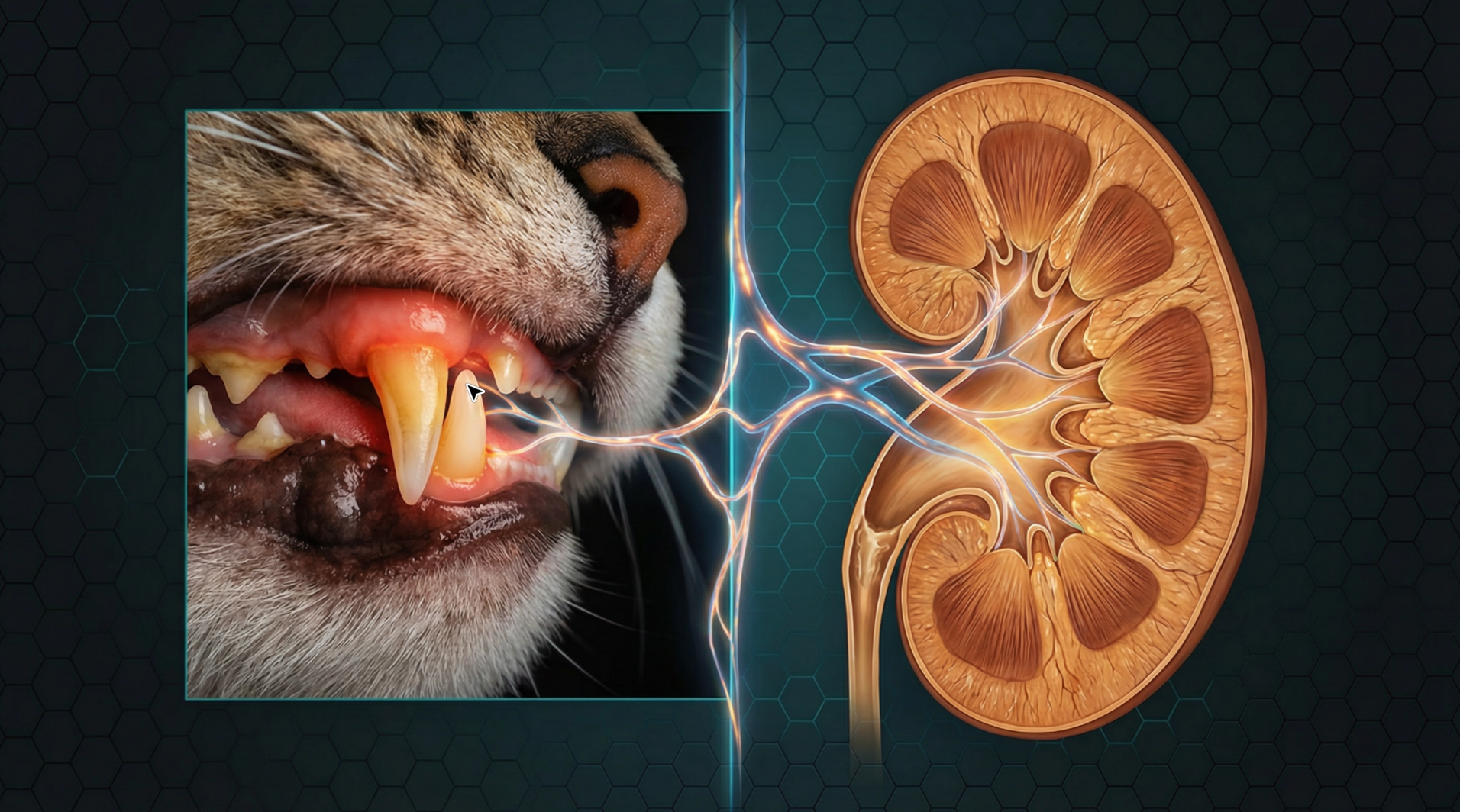
The Oral-Renal Axis and Chronic Kidney Disease in Companion Animals
Chronic kidney disease is a silent killer of aging cats and dogs, but its progression is closely linked to a surprising factor: oral health. The "oral-renal axis" reveals how inflammation from dental disease can worsen kidney function, and vice-versa. Discover the latest in diagnostics like SDMA, dietary strategies, and emerging cures that can help you manage CKD and extend your pet's life.