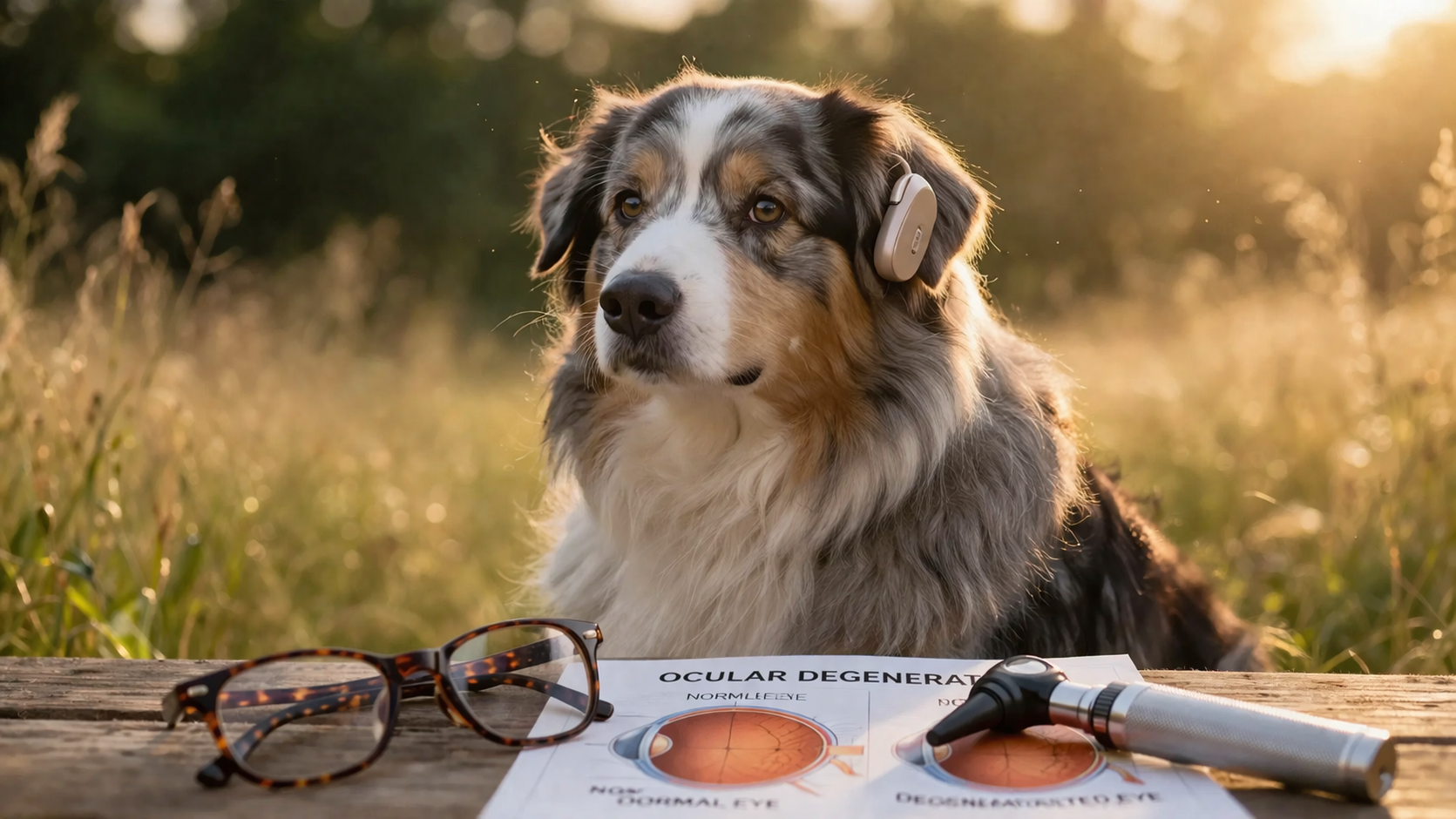
Ocular Degeneration & Hearing Loss in Aging Dogs
Ocular Degeneration and Hearing Loss in Aging Dogs: A Comprehensive Review of Prevalence, Prevention, Nutritional Intervention, and Emerging Therapies
Jake Kelly
Pet Longevity Researcher
Background: Age-related sensory decline — encompassing ocular degeneration and presbycusis — is among the most prevalent and quality-of-life-altering conditions in senior companion dogs. As canine lifespans have increased from 8.5 years (1997) to over 15 years (2020), the clinical and nutritional management of sensory aging has become a priority for veterinary medicine and informed pet owners alike.
Objective: To synthesize current evidence on the prevalence, pathophysiology, nutritional prevention, pharmacological treatment, and emerging therapeutic approaches for age-related vision loss and hearing loss in domestic dogs, with particular emphasis on modifiable risk factors relevant to pet nutrition.
Methods: Narrative review of peer-reviewed literature (2016–2025), including data from the Dog Aging Project (n > 50,000), the NC State presbycusis-cognition study (Fefer et al., 2022; n = 39), the Wang et al. antioxidant supplementation trial (2016), clinical surveys of veterinary ophthalmologists, and emerging clinical trial data from the TRIAD rapamycin study and Loyal's LOY-002 program.
Results: Nuclear sclerosis affects over 50% of dogs by age 10 and nearly 100% by age 13, though it minimally impacts vision. True cataracts, with a mixed-breed prevalence of approximately 1.6%, remain the leading surgically correctable cause of canine blindness. Progressive Retinal Atrophy (PRA) and Sudden Acquired Retinal Degeneration Syndrome (SARDS) lack effective treatments. Antioxidant supplementation with lutein (20 mg), zeaxanthin (5 mg), astaxanthin, and vitamins C and E demonstrated statistically significant improvements in retinal function (photopic ERG) in aging Beagles (Wang et al., 2016). Age-related hearing loss (presbycusis) typically presents at ages 8–10 and is strongly associated with canine cognitive dysfunction (CCD): 100% of dogs with severe hearing loss (90 dB threshold) exhibited abnormal cognitive scores compared to 39% of dogs with normal hearing (Fefer et al., 2022). The Dog Aging Project (n = 15,019) identified a 52% increase in CCD odds per additional year of age and 6.47-fold higher CCD risk in inactive versus very active dogs. Rapamycin (TRIAD trial, $7M NIH grant, 580 dogs planned) and senolytic-NAD+ combinations show early promise for delaying multi-system age-related decline. Gene therapy using AAV vectors has successfully treated inherited retinal degenerations in canine models.
Conclusions: Proactive nutritional strategies — including antioxidant-rich diets, targeted supplementation (lutein, omega-3 fatty acids, taurine, grape seed extract), glycemic control, and sustained physical activity — represent the most accessible interventions for preserving sensory health and delaying associated cognitive decline in aging dogs. The strong bidirectional relationship between sensory loss and cognitive dysfunction underscores the importance of integrated senior care approaches. Emerging pharmacological interventions, including rapamycin, senolytics, and gene therapy, may fundamentally reshape canine geriatric medicine within the next decade.
Ocular Degeneration & Hearing Loss in Aging Dogs: Prevention, Supplementation & Emerging Treatments
Executive Summary
As companion dogs live longer — average lifespans have increased from 8.5 years in 1997 to over 15 years by 2020 — age-related sensory decline has become one of the most impactful quality-of-life concerns facing pet owners. This research brief synthesizes current veterinary science on the two most common forms of sensory loss in senior dogs: ocular degeneration and presbycusis (age-related hearing loss).
The evidence is clear that sensory health is deeply interconnected with cognitive health. Landmark research from NC State University (2022) and the Dog Aging Project (50,000+ dogs enrolled) demonstrates that hearing loss is strongly associated with canine cognitive dysfunction — mirroring the relationship seen in elderly humans. For pet owners focused on longevity and quality of life, proactive sensory health management is not optional; it is foundational.
This brief covers prevalence data, the nutritional and supplementation landscape, emerging pharmaceutical interventions (including rapamycin and LOY-002), and practical at-home strategies — all tailored for The Feeding Friend's nutrition-first audience.
1. Key Findings
1.1 Ocular Degeneration: The Vision Landscape
Nuclear sclerosis (lenticular sclerosis) is the single most common age-related eye change in dogs. It is a normal, non-pathological hardening and compression of the lens that produces a characteristic bluish-gray haze. It begins appearing around age 6–7 and is present in over 50% of dogs by age 10, reaching nearly 100% by age 13. Importantly, nuclear sclerosis does not significantly impair vision and requires no treatment, though it is frequently mistaken for cataracts by owners.
Source: VCA Animal Hospitals; PMC — Quantifying refractive error in companion dogs
True cataracts are a distinct and more serious condition. Unlike nuclear sclerosis, cataracts involve actual degeneration of lens fiber structure, creating white opacities that block light from reaching the retina. Cataracts are not a normal part of aging — they result from genetics, diabetes mellitus, inflammation, trauma, or toxin exposure. Among mixed-breed dogs, the prevalence of cataracts is approximately 1.6%. In diabetic dogs, cataracts develop rapidly via the sorbitol metabolic pathway and can appear within weeks of uncontrolled hyperglycemia.
Source: DVM360 — Differentiating Nuclear Sclerosis From Cataracts
Progressive Retinal Atrophy (PRA) is a group of inherited degenerative diseases affecting photoreceptor cells. Late-onset PRA typically appears between ages 3–9 and progresses gradually, starting with night blindness before advancing to full blindness. There is currently no effective treatment or cure, and antioxidant supplements have not shown measurable effects on PRA progression in clinical studies. However, antioxidant supplementation may help delay secondary cataract formation.
Source: VCA Animal Hospitals — Progressive Retinal Atrophy in Dogs
Sudden Acquired Retinal Degeneration Syndrome (SARDS) causes rapid, complete, and permanent blindness within days to weeks. It occurs sporadically in middle-aged dogs of all breeds, with females slightly more affected. The cause remains unknown, and there is no known treatment.
Other age-related ocular changes include corneal endothelial dystrophy (progressive corneal edema, most common in Boston Terriers, Chihuahuas, and Dachshunds), vitreous degeneration (asteroid hyalosis, floaters, and syneresis), and glaucoma. Systemic diseases — including diabetes, hypertension, and Cushing's disease — can also cause or accelerate ocular damage.
1.2 Hearing Loss: The Silent Epidemic
Presbycusis — age-related hearing loss — is sensorineural in origin, resulting from degenerative changes in the cochlear hair cells and auditory nerve. It typically begins in the last third of a breed's typical lifespan and progresses gradually to complete deafness if the dog lives long enough. An estimated 5–10% of all dogs in the United States are affected by some degree of deafness or hearing impairment. Age-related hearing loss typically becomes clinically noticeable around age 8–10, with more pronounced deficits emerging at ages 12–15.
The onset is insidious: higher frequencies are lost first, followed by progressive loss across all frequencies. Owners frequently perceive the loss as sudden because dogs compensate effectively until the deficit becomes severe. Dogs may hear lower-pitched male voices but miss higher-pitched female voices, creating confusing behavioral patterns.
Source: Merck Veterinary Manual — Deafness in Animals (2025); CareCredit — Your Guide to Deafness and Hearing Loss in Dogs
The hearing–cognition connection is among the most important findings for pet longevity advocates. A 2022 NC State University study of 39 senior dogs found that 100% of dogs with severe hearing loss (90 dB threshold) showed abnormal cognitive function on validated dementia scales, compared to only 39% of dogs with normal hearing. Performance on executive function tasks — including inhibitory control, detour navigation, and sustained attention — declined significantly in proportion to hearing loss severity. The Dog Aging Project (n = 15,019 dogs) confirmed that sensory impairment is independently associated with higher odds of canine cognitive dysfunction (CCD).
Source: Fefer et al. (2022), Journal of Veterinary Internal Medicine; NC State News; Dog Aging Project — Scientific Reports (2022)
2. Data & Statistics
2.1 Ocular Degeneration Prevalence
Metric | Finding |
|---|---|
Nuclear sclerosis onset | Age 6–7 years |
Dogs over 10 with nuclear sclerosis | >50% |
Dogs over 13 with nuclear sclerosis | ~100% |
Cataract prevalence (mixed breeds) | 1.6% |
Cataract or sclerosis (dogs over 9) | 50% |
PRA onset (late form) | Ages 3–9 |
SARDS presentation | Middle-aged, acute onset |
Endothelial dystrophy onset (Boston Terrier) | Ages 5–9 |
Sources: VCA Animal Hospitals; DVM360; PMC (Wang et al., 2016); WSAVA 2004
2.2 Hearing Loss Prevalence
Metric | Finding |
|---|---|
US dogs affected by deafness/hearing loss | 5–10% |
Presbycusis clinical onset | Age 8–10 years |
Advanced hearing deficits typical | Age 12–15 years |
Severe hearing loss + abnormal cognition | 100% of 90 dB group |
CCD odds (inactive vs. very active dogs) | 6.47x higher |
CCD odds increase per year of age | 52% per year |
Sources: Merck Veterinary Manual (2025); CareCredit/AKC; Fefer et al. (2022), JVIM; Dog Aging Project (Scientific Reports, 2022)
2.3 The Sensory–Cognitive Connection
Finding | Significance |
|---|---|
Dogs with normal hearing: CCD-free | 61% |
Dogs with moderate hearing loss: CCD-free | 25% |
Dogs with severe hearing loss: CCD-free | 0% |
Severe hearing loss group: severe CCD | 50% |
Cognitive decline rate with presbycusis (humans) | 30–40% faster |
Dual sensory impairment (vision + hearing) | Substantially increased AD risk |
Sources: Fefer et al. (2022), JVIM; NC State University; Dog Aging Project; Lancet Commission (2020)
3. Expert Opinions
"Hearing loss is one of the biggest predictors of dementia in people. This study indicates that the same connection is at work in aging dogs. But since we can potentially treat hearing loss in dogs, we may be able to alleviate some of these other issues."
— Dr. Natasha Olby, Gjessing & Davidson Distinguished Chair of Gerontology, NC State UniversitySource
"Evidence from laboratory studies suggests that rapamycin can improve heart muscle function, cognitive function, and mobility, as well as extending lifespan. It seems to mimic the effects that happen in people or animals who do intermittent fasting."
— Dr. Kate Creevy, DAP Chief Veterinary Officer, Texas A&M College of Veterinary MedicineSource
"Dogs experience many of the age-related cognitive, sensory, neuropathologic and mobility changes that are common in older humans. The possibility that rapamycin might delay any of the alterations that contribute to cognitive impairment and functional decline is very exciting."
— Dr. May Reed, Geriatrician, University of Washington School of MedicineSource
"Antioxidant supplementation may be beneficial and effective in the long-term preservation and improvement of various functions of the canine eye."
— Wang et al. (2016), British Journal of Nutrition / PMCSource
"I noticed a number of aged dogs acting senile. Many of these senile dogs also had hearing loss and were hypothyroid. Supplementation with phosphatidylcholine, antioxidants, fatty acids, Ginkgo Biloba, and other supplements returns most to normal function."
— Dr. Shawn Messonnier, DVM, Paws & Claws Animal HospitalSource
4. Treatments, Supplementation & Nutrition
4.1 Ocular Health: What the Evidence Supports
Antioxidant Supplementation (Moderate Evidence)
A 2016 controlled study (Wang et al.) in adult Beagles found that a daily antioxidant blend — lutein (20 mg), zeaxanthin (5 mg), beta-carotene (20 mg), astaxanthin (5 mg), vitamin C (180 mg), and vitamin E (336 mg) — produced statistically significant improvements in retinal function (photopic ERG) and less decline in refractive error compared to controls over 6 months. This remains one of the strongest canine-specific pieces of evidence for nutritional eye support.
Source: Wang et al. (2016), PMC
Ocu-GLO™ (Most-Prescribed Veterinary Eye Supplement)
Formulated by board-certified veterinary ophthalmologists, Ocu-GLO™ combines grape seed extract (proanthocyanidins), lutein, and omega-3 fatty acids (EPA/DHA) as its three cornerstone ingredients, plus CoQ10, alpha lipoic acid, taurine, green tea extract, zinc, astaxanthin, and a B-vitamin complex. It was the second most commonly prescribed neuroprotectant in a global survey of veterinary ophthalmologists. A study showed potential delay in diabetic cataract progression with oral Ocu-GLO™ administration in dogs and rats.
Source: PMC — Presumed neuroprotective therapies prescribed by veterinary ophthalmologists; Ocu-GLO
Omega-3 Fatty Acids (Mixed Evidence)
In human retinitis pigmentosa patients, diets high in omega-3 fatty acids combined with vitamin A may slow visual acuity decline. However, dogs with progressive rod-cone degeneration (prcd) supplemented with omega-3s for up to 21 weeks showed no slowing of retinal degeneration in a research colony. Omega-3s remain beneficial for general anti-inflammatory support but should not be positioned as a standalone retinal therapy.
Source: PMC — Presumed neuroprotective therapies; PMC — The use of canine models of inherited retinal degeneration
Key Nutrients for Canine Eye Health
Lutein — Carotenoid antioxidant found in the lens and retina; absorbs damaging blue light; acts as a natural sunscreen for ocular tissues.
Zeaxanthin — Works synergistically with lutein to protect the macula and support retinal pigment density.
Astaxanthin — Potent antioxidant that crosses the blood-retinal barrier; supports both lens and retinal health.
Taurine — Amino acid essential for retinal health and photoreceptor cell function; deficiency causes retinal degeneration.
Vitamin C — Reduces oxidative stress in the aqueous humor; may reduce cataract risk.
Vitamin E — Fat-soluble antioxidant protecting cell membranes from lipid peroxidation.
Zinc — Essential cofactor in retinal metabolism and vitamin A transport.
Grape Seed Extract (GSE) — Rich in proanthocyanidins; powerful free radical scavenger with anti-inflammatory properties.
Cataract Surgery
Phacoemulsification (surgical lens removal and replacement) remains the only definitive treatment for vision-impairing cataracts. Success rates are high when performed early. Diabetic cataracts can be prevented through proper blood glucose regulation with insulin therapy and appropriate diet.
Glaucoma Management
Veterinary glaucoma treatment includes dorzolamide/timolol combination drops, latanoprost (which can reduce intraocular pressure by 30–50% in responsive dogs), and in severe cases, surgical intervention. Early detection through regular intraocular pressure measurement is critical.
4.2 Hearing Health: Limited But Evolving Options
Unlike ocular degeneration, there are currently no nutritional supplements with demonstrated efficacy for preventing or reversing sensorineural hearing loss (presbycusis) in dogs. The cochlear hair cell loss that drives presbycusis is irreversible with current veterinary medicine.
Treatable Causes to Rule Out First
Ear infections (otitis externa/media) — Hearing loss from infection is usually temporary and resolves with treatment within 2–3 weeks.
Cerumen impaction — Excess wax buildup can cause conductive hearing loss; resolved by professional cleaning.
Hypothyroidism — Can contribute to hearing loss and cognitive decline; partially reversible with thyroid supplementation.
Ototoxic medications — Aminoglycoside antibiotics, cisplatin, chlorhexidine, furosemide, and erythromycin can damage cochlear hair cells; effects are dose-dependent and rarely reversible.
Source: Merck Veterinary Manual (2025); Paws & Claws Animal Hospital
Supportive Supplementation for Cognitive-Hearing Health
While no supplement directly restores hearing, several have shown benefit for the cognitive decline that accompanies presbycusis:
Phosphatidylcholine — Clinical observation suggests improvement in senile dogs with concurrent hearing loss and hypothyroidism.
Omega-3 fatty acids (DHA/EPA) — Support neuronal membrane integrity and reduce neuroinflammation.
Antioxidant blends — Combat oxidative stress in aging neural tissue.
Ginkgo Biloba — May improve microcirculation to auditory and cognitive centers (limited veterinary evidence; human evidence more robust).
SAMe and B vitamins — Support neurotransmitter synthesis and methylation pathways involved in cognitive function.
5. Emerging Trends & Predictions
5.1 The Dog Aging Project (DAP)
The Dog Aging Project — a nationwide longitudinal study supported by the NIH with over 50,000 enrolled companion dogs — is the largest and most ambitious canine aging study ever conducted. Its comorbidity network analysis (published 2025, PLOS Computational Biology, n = 26,614 dogs) has confirmed well-known disease pairings such as diabetes preceding cataracts, and revealed under-appreciated links across organ systems. The DAP's ongoing work will provide unprecedented insight into how genetic background, environment, diet, and lifestyle shape sensory decline.
Source: Dog Aging Project; Fang et al. (2025), PLOS Computational Biology; National Institute on Aging
5.2 Rapamycin — TRIAD Clinical Trial
The Test of Rapamycin In Aging Dogs (TRIAD) has enrolled 170+ dogs across 20+ veterinary sites, with a $7 million NIH grant funding expansion to 580 dogs. Rapamycin, an mTOR inhibitor originally used as an immunosuppressant in organ transplants, shows promise for improving cardiac function, cognitive function, and mobility in aging dogs. Researchers describe its mechanism as mimicking the cellular effects of intermittent fasting. Results could have profound implications for delaying multi-system age-related decline, including sensory loss. Preliminary data from earlier DAP trials showed improved cardiac function in small doses.
Source: Texas A&M VMBS (March 2025); Coleman et al. (2025), GeroScience
5.3 LOY-001 and LOY-002 — First FDA-Recognized Lifespan Extension Drugs
Loyal, a San Francisco biotech company, is developing LOY-001 and LOY-002 as the first drugs in history to receive FDA recognition specifically for extending canine lifespan. LOY-002's clinical trial is expected to complete in 2027, with potential conditional FDA approval as early as 2026. The company has stated its canine work is intended to lay groundwork for future human longevity treatments.
5.4 Gene Therapy for Inherited Retinal Degenerations
AAV (adeno-associated viral) vector gene therapy has shown remarkable success in canine models of inherited retinal disease. Researchers at the University of Pennsylvania have successfully treated a form of macular degeneration (Best disease) in dogs by delivering a functional copy of the BEST1 gene. These successes in dogs have directly enabled human clinical trials for inherited blinding diseases. While not yet available as standard veterinary treatment, gene therapy represents the most promising long-term approach for breeds with heritable retinal degenerations.
Source: ScienceDaily / University of Pennsylvania (2018); Nature — Gene therapy advances using canine and feline models (2025)
5.5 Senolytic Therapies
A 2024 randomized controlled clinical trial demonstrated that a combination of senolytic drugs and NAD+ precursors improved owner-assessed cognitive function in senior dogs. Anti-aging strategies using senolytics — drugs that selectively eliminate senescent cells — are rapidly expanding from laboratory models into companion animal applications. A 2025 review from Seoul National University identified senolytics, dietary interventions, and structured exercise as the three pillars of emerging canine anti-aging strategy.
Source: Simon et al. (2024), Scientific Reports; Anti-aging strategies for dogs (2025), J Vet Sci
5.6 Cochlear Implants for Dogs
Research by Professor Gert ter Haar at Utrecht University demonstrated that surgically implanted middle-ear hearing devices can improve sound perception in dogs. While currently impractical and expensive for routine veterinary use, this technology represents a potential future intervention — particularly given the strong evidence linking hearing loss to cognitive decline. External hearing aids remain poorly tolerated by most dogs.
Source: Veterinary Practice — Presbycusis and Quality of Life in Companion Dogs
6. Controversial Viewpoints & Debates
6.1 The Supplement Efficacy Debate
The veterinary ophthalmology community is divided on the role of nutritional supplements for retinal disease. VCA Animal Hospitals states that antioxidant supplements and vitamins have not shown measurable effects on PRA progression. However, Wang et al. (2016) demonstrated clear retinal function improvements with antioxidant blends in aging Beagles, and Ocu-GLO™ has shown potential in delaying diabetic cataracts. The disconnect lies partly in the difference between preventing age-related functional decline (where antioxidants show benefit) versus treating established genetic disease (where they do not). This nuance is critical for The Feeding Friend's audience: supplementation works best as prevention, not rescue.
6.2 Rapamycin: Promise vs. Premature Enthusiasm
While rapamycin has extended lifespan in yeast, worms, flies, and mice, a 2025 review in Frontiers in Aging concluded there is still no clear clinical evidence it extends lifespan in mammals in real-world conditions. Critics note that chronic mTOR suppression can impair immune function, glucose metabolism, and wound healing. The intermittent dosing protocol used in current trials may avoid these issues, but this remains a hypothesis under testing. Some longevity enthusiasts have already begun off-label use through compounding pharmacies, a practice veterinary experts warn against without proper veterinary supervision.
Source: HelpDementia.com — Analysis of rapamycin clinical evidence
6.3 Hearing Aids: Practical Solution or Pipe Dream?
Despite advances in human audiology, practical hearing restoration for dogs remains elusive. Dogs do not tolerate external hearing aid devices well, and cochlear implants, while technically feasible, remain prohibitively expensive and are limited to research settings. Some veterinarians argue that resources are better spent on environmental adaptation and hand-signal training than pursuing technological hearing restoration. Others counter that the strong link between hearing loss and cognitive decline justifies investment in auditory intervention research.
6.4 When Is Sensory Loss a Quality-of-Life Issue?
There is ongoing debate about when sensory decline constitutes a genuine welfare concern versus normal aging that dogs compensate for effectively. Most dogs adapt remarkably well to gradual vision or hearing loss within 2–3 months. However, concurrent sensory and cognitive decline creates compounding effects that significantly impact quality of life, owner–pet bond quality, and potentially accelerate further cognitive deterioration.
Source: The Pet Vet — Aging Dog Blindness Adaptation; AKC — Hearing Loss in Senior Dogs
7. Practical Implications for Pet Owners
7.1 Nutrition-First Prevention Strategy
For The Feeding Friend's audience, the research supports a clear, proactive nutritional framework:
Feed an antioxidant-rich diet from middle age onward. Blueberries, kale, and other carotenoid-rich foods provide natural lutein, zeaxanthin, and vitamin C.
Supplement strategically with veterinary-formulated eye health products containing lutein (minimum 10–20 mg for medium/large dogs), omega-3s (EPA/DHA from marine sources), grape seed extract, and taurine. Begin by age 5–7 for at-risk breeds.
Maintain lean body weight. Obesity increases systemic inflammation and metabolic disease risk (particularly diabetes, the leading preventable cause of cataracts).
Control blood glucose vigilantly in diabetic dogs. Diabetic cataracts can form within weeks of uncontrolled hyperglycemia and are among the most preventable forms of blindness.
Ensure taurine adequacy. Taurine deficiency directly causes retinal degeneration; grain-free diets and some boutique formulations have been associated with taurine insufficiency.
Prioritize omega-3 fatty acids for both eye and brain health. While omega-3s have not proven effective against inherited retinal diseases, they support retinal cell membrane integrity and reduce neuroinflammation associated with cognitive decline.
7.2 Proactive Veterinary Care
Schedule annual ophthalmic exams starting at age 7. Early cataract detection enables surgical intervention when success rates are highest.
Request BAER testing for dogs showing early signs of hearing decline (around age 8–10). Ruling out treatable causes (infections, hypothyroidism) is essential before attributing loss to presbycusis.
Monitor for cognitive dysfunction concurrently. Sensory loss and cognitive decline are interrelated; screening for both enables more comprehensive senior care.
Manage systemic health conditions aggressively. Hypertension, diabetes, Cushing's disease, and hypothyroidism all have downstream effects on eye and ear health.
Avoid ototoxic medications when possible. Discuss alternatives with your veterinarian if your senior dog is prescribed aminoglycoside antibiotics, cisplatin, or chlorhexidine ear cleaners.
7.3 Environmental & Behavioral Adaptation
For vision-impaired dogs: Maintain consistent furniture placement, use textured rugs as navigation cues, install baby gates at stairs, and use scent markers at doorways.
For hearing-impaired dogs: Train with hand signals early (before hearing loss progresses), use vibration cues (stomping, vibrating collar), approach with heavy footsteps to avoid startling, and never let off-leash in unfenced areas.
For dogs with both: Desensitize to touch from an early age; reward calm responses to unexpected contact; keep familiar dogs and routines consistent; and add ID tags noting sensory impairments.
Source: AKC — Age-Related Vision and Hearing Loss in Dogs; Wisdom Panel — Deafness in Dogs
7.4 Exercise — The Most Powerful Intervention
The Dog Aging Project's analysis of over 15,000 dogs found that inactive dogs had 6.47 times higher odds of canine cognitive dysfunction compared to very active dogs of the same age, health status, and breed type. Physical activity is the single most modifiable lifestyle factor for preserving cognitive (and by extension, sensory-cognitive) health into old age. This is a cornerstone message for The Feeding Friend: nutrition and exercise are complementary, not interchangeable.
Source: Bray et al. (2023), GeroScience / Dog Aging Project; Dog Aging Project — Scientific Reports (2022)
8. Key Sources & References
Peer-Reviewed Research
Fefer G, Khan MZ, Panek WK, Case B, Gruen ME, Olby NJ. Relationship between hearing, cognitive function, and quality of life in aging companion dogs. Journal of Veterinary Internal Medicine. 2022. DOI: 10.1111/jvim.16510
Wang W, Hernandez J, Moore C, Jackson J, Narfström K. Antioxidant supplementation increases retinal responses and decreases refractive error changes in dogs. British Journal of Nutrition. 2016. PMC4891559
Fang A, Kumar L, Creevy KE, Promislow DE, Ma J, et al. Constructing the first comorbidity networks in companion dogs in the Dog Aging Project. PLOS Computational Biology. 2025. DOI: 10.1371/journal.pcbi.1012728
Bray EE, Raichlen DA, Forsyth KK, et al. Associations between physical activity and cognitive dysfunction in older companion dogs: results from the Dog Aging Project. GeroScience. 2023;45(2):645–661. PubMed
Simon KE, Russell K, Mondino A, et al. A randomized, controlled clinical trial demonstrates improved owner-assessed cognitive function in senior dogs receiving a senolytic and NAD+ precursor combination. Scientific Reports. 2024;14:12399. DOI: 10.1038/s41598-024-63031-w
Coleman AE, et al. Test of Rapamycin in Aging Dogs (TRIAD): study design and rationale. GeroScience. 2025;47(3):2851–2877. PubMed
Guziewicz KE, Cideciyan AV, et al. Gene therapy for Best disease in canine model. PNAS. 2018. ScienceDaily
Anti-aging strategies for dogs: current insights and future directions. J Vet Sci. 2025;26(Suppl 1):S199–S219. PMC
Dog Aging: A Comprehensive Review of Molecular, Cellular, and Physiological Processes. Cells. 2024;13(24):2101. PMC
Veterinary Clinical Resources
Merck Veterinary Manual. Deafness in Animals. Reviewed/Revised Aug 2025. Link
VCA Animal Hospitals. Progressive Retinal Atrophy in Dogs. Link
VCA Animal Hospitals. Lenticular Sclerosis in Dogs. Link
DVM360. Cataracts: How to uncover the imposter lenticular sclerosis. Link
PMC. Presumed neuroprotective therapies prescribed by veterinary ophthalmologists for canine degenerative retinal and optic nerve diseases. Link
Institutional & Project Sources
Dog Aging Project. National Institute on Aging / NIH. Link
Texas A&M VMBS. Dog Aging Project Receives $7 Million NIH Grant. March 2025. Link
NC State University. Hearing Loss in Dogs Associated with Dementia. August 2022. Link
AKC. Hearing Loss in Senior Dogs. Link
AKC. Age-Related Vision and Hearing Loss in Dogs. Link
Related Articles

The Ultimate Guide to Canine Longevity: Maximizing Healthspan in Senior Dogs
As our dogs age, the goal shifts from simply keeping them alive to maximizing their healthspan. This comprehensive guide breaks down the six science-backed pillars of canine longevity, from precision nutrition and hormone optimization to cognitive support and physical therapy. Discover actionable strategies and explore a real-world longevity supplement stack designed to target every major pathway of aging.
A Dog Owner's Guide to Chronic Kidney Disease: Diagnosis, Management, and Extending Life
Just received a kidney disease diagnosis for your dog? This guide breaks down everything a concerned owner needs to know about Chronic Kidney Disease (CKD), from understanding IRIS stages to the single most important action you can take: diet. Learn about the latest treatments that can extend your dog's life and how to partner with your vet to create the best care plan.
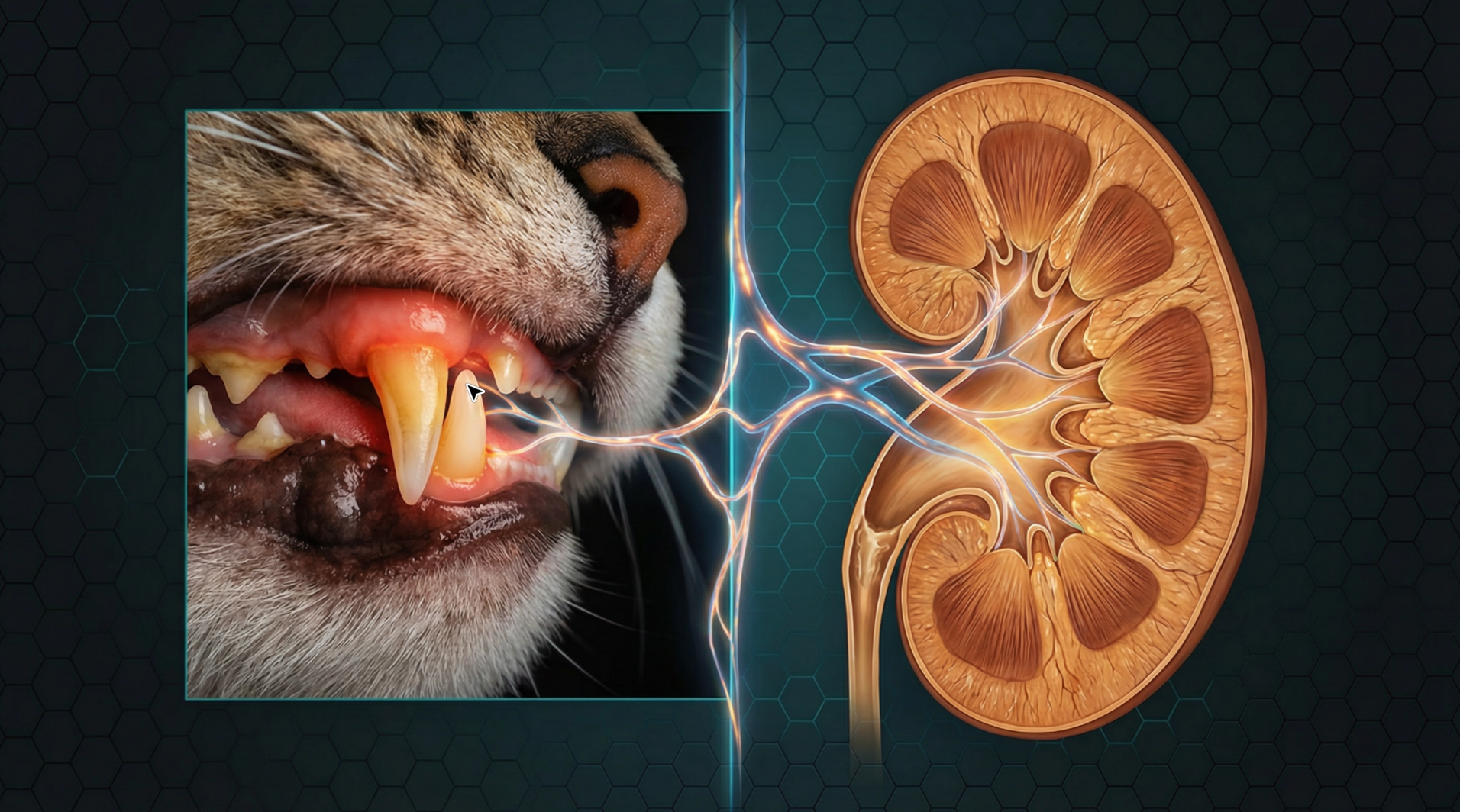
The Oral-Renal Axis and Chronic Kidney Disease in Companion Animals
Chronic kidney disease is a silent killer of aging cats and dogs, but its progression is closely linked to a surprising factor: oral health. The "oral-renal axis" reveals how inflammation from dental disease can worsen kidney function, and vice-versa. Discover the latest in diagnostics like SDMA, dietary strategies, and emerging cures that can help you manage CKD and extend your pet's life.